Wasp waist dress forms are valued as antiques and collectibles, offering insight into historical fashion practices and societal norms. They serve as reminders of the evolution of body image ideals and the fashion industry’s role in shaping perceptions of beauty.
According to Wikipedia, a ”Wasp waist is a women’s fashion silhouette, produced by a style of corset and girdle, that has experienced various periods of popularity in the 19th and 20th centuries. Its primary feature is the abrupt transition from a natural-width rib cage to an exceedingly small waist, with the hips curving out below. It takes its name from its similarity to a wasp‘s segmented body. The sharply cinched waistline also exaggerates the hips and bust.”
Currently we have seen an increase in the wasp waist dress forms we have for sale. Normally our customers were museums buying them to display vintage clothing. But recently we have seen private individuals buying them to use a decor for their bedroom. And they frequently want the dress form to look distressed, so they use some of the tutorials here to give it a “instant vintage” look.
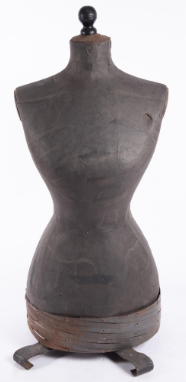
The wasp waist dress form, characterized by its dramatically cinched waist and accentuated bust and hips, emerged as a pivotal tool in the fashion industry during the late 19th and early 20th centuries. This design mirrored the prevailing beauty standards of the Victorian and Edwardian eras, where an hourglass silhouette was highly coveted.
Historical Context
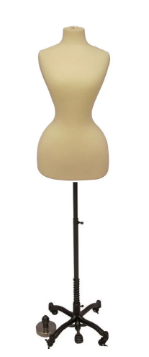
In the 19th century, the ideal feminine figure was epitomized by a narrow waist, often achieved through tight-lacing corsets. Dress forms of this period, known as wasp waist mannequins, were crafted to reflect these proportions, aiding designers and dressmakers in creating garments that conformed to societal ideals. These forms featured a pronounced taper at the waist, mimicking the effects of corsetry.

Design and Construction
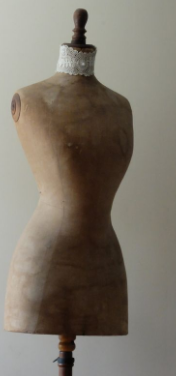
Wasp waist dress forms were typically constructed with a sturdy internal structure to withstand the pressures of tight-lacing. Materials such as papier-mâché, fabric, and wood were commonly used, with a covering of linen or cotton to provide a smooth surface for draping fabrics. The exaggerated waistline, often measuring between 16 to 18 inches, was a defining feature, accentuating the contrast between the bust, waist, and hips.
Cultural Significance
These dress forms not only facilitated garment construction but also symbolized the societal expectations placed upon women to achieve the wasp waist silhouette. The use of such forms underscores the lengths to which fashion would go to conform to beauty standards, often at the expense of comfort and health.
Here are some notable examples of wasp waist dress forms:
Antique French Wasp Waist Mannequin
A late 19th-century French dress form featuring the characteristic narrow waist and wooden stand, exemplifying the elegance of the era.

Vintage Wasp Waist Dress Form
An early 20th-century mannequin with a pronounced wasp waist, used by tailors for creating fitted garments.
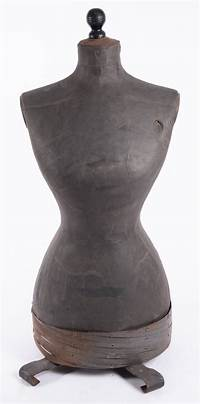
Antique French Wasp Waist Mannequin circa 1900
A beautifully preserved dress form from the early 1900s, showcasing the typical hourglass shape desired during the period.
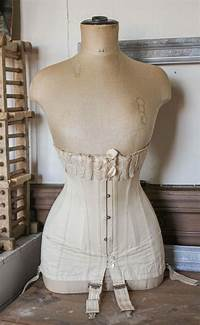
Antique French Wasp Waist Dress Form, Victorian Era
A Victorian-era mannequin displaying the extreme waist reduction fashionable at the time, complete with original fabric covering.
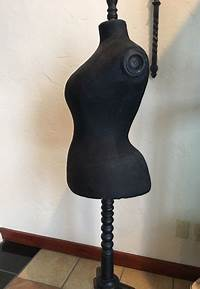
Antique French Wasp Waist Mannequin, Tailor’s Dummy
A rare tailor’s dummy from France, featuring the distinctive wasp waist silhouette, used for high-fashion dressmaking.

These examples highlight the craftsmanship and design aesthetics of the period, reflecting the cultural emphasis on the wasp waist silhouette.
The wasp waist dress form remains a significant artifact in the history of fashion, illustrating the interplay between societal beauty standards and garment construction. Its legacy prompts reflection on the ever-evolving definitions of beauty and the importance of comfort and health in fashion design.
Visit our website to shop for mannequins and dress forms, rent display pieces, or recycle your old mannequins.